

Who Is Dasha Pears?
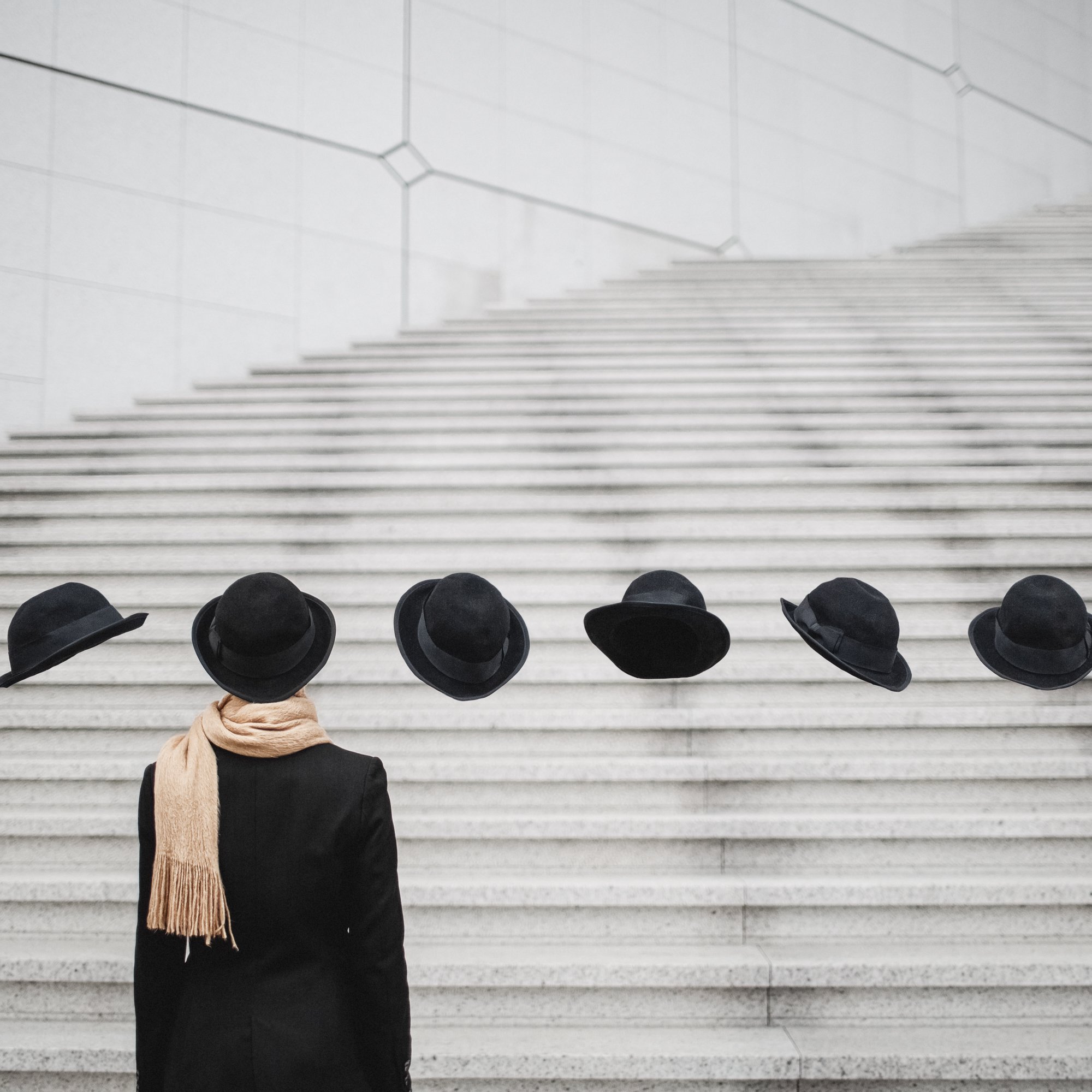
Dasha Pears is an award-winning artist, working in a style that she calls "psychorealism". Her uncanny laconic, and aesthetically clean art pieces are focused on portraying what might be going on in our inner worlds. Dasha makes emotions and psychological states tangible (or realistic), hence the term - "psychorealism".
Dasha uses the instruments of surrealism, minimalism, color, photography, and digital manipulation to tell surprising visual stories with a twist. In her stories, she speaks about deepest psychological matters, bringing things that are usually considered unpretty to light, making them shine with different colors and aesthetically appealing. This way Dasha's art gives viewers a chance to be at peace with themselves, providing an almost physically soothing effect on the human psyche.
Bio
Dasha Pears began her artistic journey in 2010. Since then, her work has been exhibited internationally across Germany, France, Austria, Italy, Spain, Poland, Finland, Mexico, Israel, the United Kingdom, the United States, and South Korea.
Her photography has been recognized by more than 10 prestigious art and photography awards, including the Smithsonian Magazine Award, Hasselblad Masters, and a Gold Medal from the Photographic Society of America.
Today, her pieces are held in over 100 private collections worldwide, with collectors based in cities such as London, Paris, New York, Los Angeles, Austin, Hong Kong, and Singapore. Her work is also owned by art professionals affiliated with institutions, including Sotheby’s, the Harvard Art Museum, and the Obama Foundation.
Psychorealism
My works are a depiction of psychological and emotional states, whether existing or desired.
So in this sense, I can’t call them surrealistic, as surrealism is based on dreams and the unconscious, but rather psychorealistic or subjectively realistic.
The “realistic” part is very important to me. I want to make my images as believable as possible, therefore I like to keep little imperfections like wrinkles on clothes or wall cracks untouched, or should I say unretouched. At the same time, my goal is to surprise the viewer and make their jaws drop, simultaneously finding comfort, relief, and release in what they see.
I use the instruments of minimalism, reducing all the clutter, to make my works look sharper, more straightforward, and to the point. I want to give my audience a breath of fresh air when they look away from the messy, unstable, polluted, and chaotic real world and get into a clean, controlled, and calm reality, where it’s ok to be yourself. It’s like finding a psychological or you can say “spiritual” home.

My art is influenced by classical painting, post-impressionism, surrealism, as well as contemporary and modern visual art. At the same time, I constantly source inspiration from Asian philosophical tradition, as well as scientific works on psychology and neuroscience.
I strive to make my images as believable and realistically convincing as possible so that they produce a deeper impact on my viewers. This is why all the elements photographed for a single artwork are created specifically for it and are shot simultaneously in the same lighting conditions. There are no computer-generated or stock images in my work, just complex digitally manipulated combinations of my own photographs. The instruments of surrealism help me show that the scene is going on in the character’s mind.
My works are carefully composed, and many of them are leaning toward minimalism. This is my way of expressing that controlling your mind and creating space are crucial for discovering who you are and who you are not.